Showing posts with label Mammal. Show all posts

Green Moray (Gymnothorax funebris)


The Life of Animals | Green Moray (Gymnothorax funebris) | Green Moray is one of Moray big Its length can reach 8 feet (2.5 m) with a weight of 65 pounds (29 kg). but Green Moray elongated body and looks muscular. The yellow color of the mucus in combination with a base color so it looks dark green color on the skin. Green Moray has no fins abdomen and chest, back and anal fins long and continuous with a short tail fin. This water passes over the gills out through the gill slits. Green Moray teeth of large, smooth edged and easy to be seen if the jaws open. Teeth on the roof of the mouth (known as the vomerine teeth)


Green Moray can be found in the western Atlantic Ocean from New Jersey to Bermuda and northern Gulf of Mexico, south to Brazil, including Ascension Island.  Green Moray is a solitary animal. Green Moray hiding during the day in rocky crevices.


Green Moray conduct its activities at night (nocturnal). Green Moray predator fish, crabs, squid and shrimp that rely mostly on sense of smell to find prey. Green Moray spawn. Although little is known about the spawning Green Moray, the data is known is egg diameter 1 mm from the Green Moray females measuring 1.1 meters.


Green Moray is very attractive to divers. Aesthetic appeal of the Green Moray who made this animal was commercialized. Large Green Moray potentially dangerous. Green Moray often seen only his head protruding from the crevices. A bite from a large Moray has the potential to become severe and potentially life threatening.

Dugongs


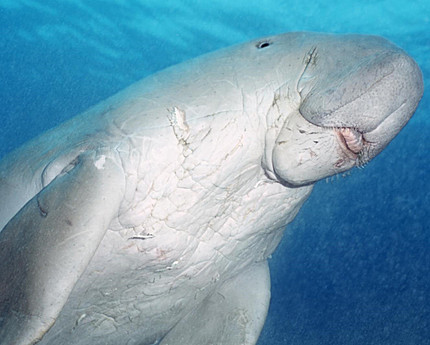
The Life of Animals | Dugongs | Dugongs including the rarest marine animals in Indonesia is currently among the various rare animals that must be protected. Although many people refer to these animals as a mermaid, but these animals are not fish. Similar to dolphins, dugongs including mammals. The mother breastfeeding her child. Another difference with the dolphins, their anatomy, mermaid looks more like an elephant, do not eat fish because it includes species of mammal herbivores, who eat in the sea grass beds of sea grass.
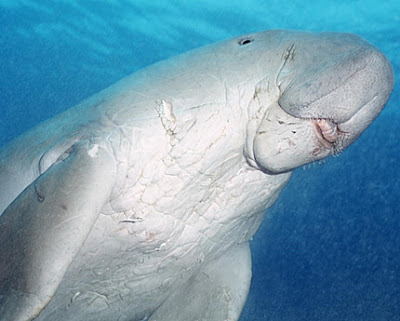


Dugong has a tail that is similar to the tail fin whales, as well as having a unique head shape. Mouth circular shape so as to make easy dugong foraging by sweeping the surface of the sea. These mammals included in the order Sirenia, dugongidae family, and genus dugong. In addition to funny, dugongs also has a fairly large body like a submarine with an adult body length of about 2.5 - 3 meters with a weight of 225-450 pounds. Dugong has skin slightly bluish gray with a thickness of about 1 inch and slippery. Until now, mermaids easily found in Madagascar and East Africa through India to Australia. No scientist can ascertain the number of manatees that still persist in Indonesia. Only estimates of the number 1,000 to 10 thousand heads. But scientists believe this number dropped dramatically in recent years.

Lodging in Kalimantan, there are five locations known to the discovery of a mermaid, the Balikpapan Bay, Kota K., Karimata Island, Gulf of Kumai, and Derawan Islands. In 1996, these marine mammals have been declared extinct in Kalimantan. But four years later, the animal was re-discovered by the Foundation RASI (Rare Aquatic Species of Indonesia) in Balikpapan Bay and can still be seen today. Population decline due to the number of dugongs excessive hunting by humans for meat, two pairs of tusks, as well as other parts that can be commercialized. In addition, marine pollution and business development in coastal and littoral areas of a dugong food source is located. It is not comparable with the proliferation of dugongs are slow and limited the number of births. A fact which led to the decreasing population of dugongs.
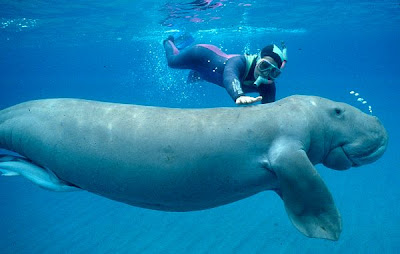
In Balikpapan Bay, dugongs are threatened pub destroyed. The main threat due to loss of seagrass, which is the main feed mermaid. Sea grass is disappearing due to sedimentation and chemical pollution caused by the emergence of oil palm estates, like plantation of PT Agro Indomas in the Village Pemaluan and Sepaku (Paser Penajam Northern District). "This company has planted palm along the coast, banks of rivers, and creeks. By law this act clearly illegal, since they planted oil palm in the buffer zone, "said Stanislav Lhota, researchers from the Department of Zoology University of South Bohemia Cechnya Republic who devoted most of his life to preserving endangered animals in Balikpapan Bay. The opening of oil palm plantations has resulted in changes in water conditions and Pemaluan Sepaku River. Changes in water color from greenish brown to yellow can also be seen from satellite imagery. On the other hand, oil palm and industrial timber estate (HTI) of acacia wood by PT ITCI Hutani Manunggal in Ulu Sungai Pemaluan and Sepaku, also considered a source of herbicide wastes that can poison the water. Not only is harmful to humans, but also for the sea grass beds that are so important to the mermaid. While the sources of sediment and chemical pollutants that also occur in seagrass beds are also due to the development of industrial zones along the coast Kariangau. Mercury from industrial waste is not only accumulate in fish eaten by people, but also in the seaweeds are eaten dugong. Construction of two factories CPO (crude palm oil) outside Kariangau Industrial Area, namely, PT Kencana Indonesia dock in protected areas and PT Bumi Andalas Blooms in mangrove area, certainly led to Aberdeen no longer have a healthy coast.

Disaster increasingly larger, because many coal mine was opened along the Balikpapan Bay, especially in the District of PPU. Large firms such as PT Pratama Sing-Straight, known habitat is located very close to the dugongs and is a very significant source of pollutants. The presence of dugongs are also threatened by ship traffic, oil disposal, painting the ship, and cleaning the ship while in port. All human activity is a source of pollutants that can destroy sea grass and dugongs lead poisoning. "Noise is very disturbing mermaid boat engines. This causes them to look for food to areas further away, For the people of Aberdeen and surrounding areas who want to see manatees directly in their habitat, it is recommended to visit the region Tempadung River Estuary. Although the possibility to see these mammals very kecil.Tetapi Stanislav states, the construction of the factory CPO by jetty PT Kencana Indonesia in the region will cause the mermaid will be forced to leave the food source in the region.

Though manatees are no longer had more food resources than in the region. Logically, it will definitely punah.Tapi biggest threats to the dugong is not only due to the factors described above. There are still other factors the most fatal, namely the construction of bridges and roads connecting Balang Island along the Gulf coast of Aberdeen. Development which he believed would lead to large-scale encroachment and resulting in deforestation and degradation of ecosystems. "This development would threaten the ecological integrity of the entire Gulf of Aberdeen, not only habitat for dugongs, but also other ecosystems that live in Balikpapan Bay,
Detail: Dugongs

Weasel


The Life of Animals | Weasel | The weasel is a small, thin mammal. Weasels are found all around the world apart from the Arctic and Australia including it's surrounding islands. The weasel feeds mainly on small mammals and the weasel has a bad reputation amongst farmers who do not approve of the weasel stealing their poultry and their eggs. The weasel can burrow quickly into the ground, meaning the weasel can easily escape danger including farmers that want to catch them.


The weasel tends to grow to about 30cm long with a tail roughly the same length as the weasel's body. The weasel is generally a solitary animal but some species of weasel congregate together in groups for months on end. Weasels most typically come together to mate. The weasel belongs to the same animal family as and is closely related to other animals such as ferrets,stoats and polecats. All these animals have a similarly long-shaped body and pointed snout and are all found in similar environments.

Weasels are most commonly found in wooded areas but weasels are rarely found in really dense, thick forest. Weasels burrow and nest in hollow logs and under piles of rocks and weasels will often inhabit the nest of one of their prey rather than building a new one themselves. Weasels most commonly breed during the mid-summer months and give birth to their young in late spring the following year. The female gives birth to an average of 6 baby weasels, which are pink, blind and tiny and have very little fur. After a couple of weeks the fur of the baby weasels is much thicker and the baby weasels are able to eat solid food after about a month. By the time the baby weasels are two months old, they have taught by their mother weasel how to hunt their own food and soon become independent.

Weasels are prey to numerous larger animals such as foxes, cats, snakes and birds of prey. It is because they are so vulnerable to being eaten, that many weasels will not even live to be year old. The average lifespan of a wild weasel is thought to be around 3 years but weasels have been known to live for longer in captivity. Generally, weasels prey on small animals such as mice, birds and baby rabbits. The larger male weasels however have been known to prey on larger animals that are bigger than they are. 

Detail: Weasel

Big-belly

  
The Life of Animals | Big-belly | You hear the word horse may already know, there are two types of horses are divided according to their habitat, which is on land and at sea, this time the animals that we can see the sea horses, maybe you only know a few kinds of sea horses, sea horses sea horses this is a very attractive because of its beautiful and also pretty much the animal is used as an ornamental in the aquarium animals want to know? The following report


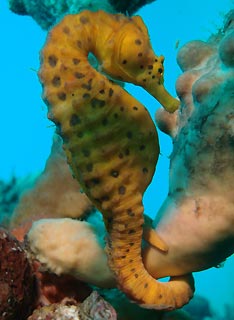
The big-belly seahorse has a forward-tilted, long-snouted head, distended but narrow pot belly, and a long coiled tail. It swims using its dorsal fin with a vertical stance - when not swimming it coils its prehensile tail around any suitable growth, such as seaweed, waiting for planktonic animals to drift by when they are sucked up by the small mouth set at the tip of the snout much like a vacuum cleaner. Seahorses are voracious feeders, eating mainly crustaceans, such as shrimps, and other small animals living among the seaweed such as copepods and amphipods. They do not masticate so they can eat to excess because of their small gut tract. Each eye moves separately making it easier for them to see food and predators.


It is quite easy to distinguish males from females. The male have a smooth soft pouch-like area at the base of its abdomen between where the stomach meets the tail on the front side. Males also have a fin here but it is less obvious. The female will have more of a pointed stomach with a very obvious fin at the base of the stomach. large-belly seahorses have a very intricate social life every morning, the female travels to her mate and they entwine tails and 'dance' together for six to 10 minutes, changing colour and promenading across the seabed. In wild seahorse populations, monogamy appears to be the rule rather than the exception. It is thought that such pair bonding is reinforced by daily greetings which are performed only with an individual's partner


If the female is not receptive she ignores the male, who then looks for another potential mate. If no females are receptive the male stops displaying and deflates the pouch by dilating the pouch opening and bending forwards, expelling the water inside. If a female is receptive to a courting male, she reciprocates with her own colour changes and head tucking, typically intensifying the lighter colours such as yellow and white, highlighting the contrast between these colours and their overall darker blotching and banding patterning. A series of short bursts of swimming together in tandem then ensues, sometimes with tails entwined, or with the female tightly rolling her tail up. This has often been described as ‘dancing’. After coming to rest, the male attempts to get the female to swim towards the water surface with him by repeatedly pointing his snout upwards.


If the female responds by also pointing her snout upwards then the final stage of courtship follows. This involves both males and females swimming directly upwards towards the water surface with both their heads pointing upwards and tails pointing straight down. If they reach the water surface, one, or both seahorses, can often be seen and heard to snap their heads. To transfer her eggs to the male, the female faces the male, slightly above him. Pressing the base of her abdomen against the male's pouch she then squirts her eggs through the opening in the front of his dilated pouch. The male seahorse can give birth to up to 721 babies at a time. Their colouring is a variable shade of brown, mottled with yellow-brown and with darker splotches. The tail is often circled with yellow bands. In deeper water where the tail is anchored to other colourful forms of life, such as sponges and hydroids, they often take on these colours.
Detail: Big-belly

Bobtail Squid


The Life of Animals | Bobtail Squid | squid divided from various types of course also have different benefits, this one has an animal is a funny shape and color are also attractive and beautiful, these animals are usually much used as an ornamental ornamental animals in the aquarium, want to know? The following report


Now that humans have had their fun, it’s time that our fellow cephalopods get a taste of space. Inky, as I have chosen to call him, is the first squid to ever be launched into space. He is a Bobtail squid and will be the main star in a rather interesting study. Strictly for scientific research, Inky will give scientists insight into how microbes within its body respond to space. In the past, microbes such as Salmonella were three times more destructive to their host mouse after being in space for a certain period of time.


My main curiosity is how they will keep the squid alive. Since water does that awesome globular trick in microgravity, how will the tank/box/bag the squid is in contain non-floating water? I suppose the solution will be to ensure the case has minimal air so the water has very little space to float. The squid won’t have to worry about this problem for too long (if it actually is a problem), since it will be getting the knife soon after it reaches space. Perhaps the astronauts will have some calamari for dinner in the next few days.


A nice way for the Endeavor to spend it’s last trip, giving new species a chance to view the Earth from afar. Although, I’m not sure how much Inky will appreciate the view.

Polar Bears


The Life of Animals | Polar Bears | Polar bears or polar bear or the scientific name Ursus maritimus is the rule genera of large mammals, biological family Ursidae. He included Circumpolar species contained in and around the Arctic and is the largest land mammal genera of animals. Polar bears adult males weighing between 400 to 600 kilograms and occasionally exceed 800 kg. Polar bears about half the weight of female and male bears typically weigh between 200 to 300 kg. Adult male bears along the 240 to 260 centimeters and the female polar bears between 190 to 210 cm. When a newborn, baby bear weighing 600 to 700 grams.


In winter, the bears more than a slow metabolism can be predicted by their body temperature. Do not judge a bear of body temperature, such as indicated by the first data about the physiology of hibernation. There's something going on in the black bear hibernation which slows metabolism ratio is more than can be explained by a low body temperature, according to a report Oivind Toien ecological physiologists from the University of Alaska Fairbanks. In the winter of Alaska, the black bears are closely monitored, lowering their body temperature an average of only 5.5 degrees Celsius, as reported by Tøien and his colleagues in the February 18 issue of the journal Science. Physiology standard calculations predict that the cold as it will slow the metabolism of about 65 percent ratio non hibernasi break. However, metabolism is slowed even the bears to the zone of energy savings that on average only 25 percent of the basic ratio of the summer.
 

Things like that have so far not been found in studies on other mammals that do hibernate, said co-researcher Brian M. Barnes is also from the University of Alaska Fairbanks. Mammalian hibernation is important for human medical research, said Hank Harlow ecological physiologists from the University of Wyoming in Laramie. Basing on the mechanism that eager to be understood by scientists, black bears spend five to seven months without eating, drinking or urinating. However, unlike people who simply spend some time in bed or outer space, mammals that hibernate do not lose muscle strength or their bone mass. "The bear is impressive," said Harlow.


This study is the first continuously monitors the ratio of metabolism and body temperature during hibernation bears on the conditions of low disturbance, said Tøien. Another study based on sampling is not continuous with the older equipment, indirect evidence, or studying the bears with a lot of people who are in close proximity, resulting in "uncertainty," he said. He and his colleagues get the data in such a big way to volunteer for the study of black bears searching for food near the residential area and will soon be killed because it was considered as a threat. "We read about them in the Anchorage Daily News before we get them," said Toien.


To study their hibernation, the researchers monitored the five bears, putting them in wooden boxes deep in the woods. Wooden boxes are deliberately not very strong so that the bears can destroy it whenever they want to get out. But when the bears are in it, the researchers examined the concentration of oxygen to track the metabolic ratio. The instruments also measured the movement of muscle and heart function. One of the bears are not much lower body temperatures during early hibernation until she gave birth to a cub. The child bears can not survive, and after that the female bear's body temperature is behaving more like a body other bears.


Reports of decreased metabolic ratio is good enough for hibernation encouraging Eric Hellgren from Northern Illinois University, which recognizes "a biased point of view as a bear biologist." He said studies conducted in Alaska may be an end to a lengthy discussion of the physiologists who consider hibernation bears as "a form different and 'less'" than the major metabolic changes seen in small animals like ground squirrels. More detailed monitoring also reveals a special bear habits, such as the cycles of several days or during mid-hibernation when the bears to temporarily raise their body temperature. Tøien not assess a small increase is equivalent to the full periodic heating is usually done by almost all the smaller animals that do hibernate, which raise their body temperature to the normal range for several weeks, urinate and then dropping their body temperature. The researchers are not careful measuring metabolism during a bear cycle will get inflation numbers on the line hibernation, he noted.


Measurement of heart rate on the three bears of Alaska shows a decrease from an average of 55 beats per minute before hibernation to 14 beats per minute erratic season. Harlow said he had also heard of bears hibernating heart beats for some time and then beat the erratic. Perhaps to save energy, speculation. Alaska team also found that when the bears move again in the spring, their metabolism takes several weeks to crawl back to normal. Monitoring data indicate that the bears with half the speed of metabolic ratio still showed a normal bear behavior. Observations are compatible with studies conducted on grizzly bears that spend the first few weeks after hibernation with half a heart rate of speed in the summer, said Lynne Nelson of Washington State University in Pullman. "The ability of physiological adaptation of the system bears this never stops surprising me."

Orca (Orcinus orca)


The Life of Animals | Orca (Orcinus orca) | Orca (Orcinus orca) is the largest species of the dolphin family. This species is found in all oceans, from the cold regions like the Arctic and Antarctica to the warm temperate regions. Killer whales are predators, eating mostly fish populations, comparison with other populations  eat marine mammals like sea lions, seals, walruses to large whales.


Killer whales hunt in deadly groups, family groups consisting of up to 40 individuals. There seemed a good group of permanent and temporary groups of the population of killer whales. Different groups are hunting the prey is different and uses different techniques in catching prey.


Permanent groups tend to prefer fish, while the group while targeting marine mammals. All groups using the techniques of effective and cooperative hunting, which is sometimes equated with the behavior of wolves.


Whales have a wide diversity in terms of communication via voice, and each group has a different sound, which can be recognized by members of the group even from a great distance They use echolocation to communicate and hunt, making sounds that were able to cross under the water until it met with an object, and then reflected back so that it can reveal the location, size, and shape of the object.


Killer whales are very protective of her child and adolescent females often assist the mother caring for children. Parent killer whales give birth every 3 to 10 years, after 17 months of pregnancy. Orca quickly known for their colors are black and white flashy and smart, well-trained star performances in the aquarium. Killer whales themselves have never been extensively hunted by humans.

hippopotamus

  
The Life of Animals | hippopotamus | This one animal animal who loved to bathe, this animal is very big and weight, there is this animal body reach 1000 kg weight, these animals we encounter a lot of habitat in africa, but also our own country can find him at the zoo, want to know? The following report  

The name hippopotamus means "river horse". The hippopotamus is an extremely large creature with a round body, short legs, and a big, broad head. They are brownish gray on top and a light pink color underneath. The hippopotamus has its ears, nose, and eyes positioned on the top of its head so it can remain submerged What does submerged mean? and still keep track of what is going on around it. Hippopotamuses spend most of the day in the water and secrete a pink, oily substance that acts as a sunscreen. When it submerges What does submerges mean? it closed its nostrils and its ears so water won't get in. The hippopotamus is very buoyant and has no trouble getting around underwater. A hippopotamus can stay underwater for about 15 minutes. It is a toss up whether the hippopotamus is the second largest land animal (it could be the rhinoceros instead.) 


The hippopotamus is herbivorous What does herbivorous mean?. They come out of the water at night to graze and can eat up to 100 pounds of vegetation in one night. Hippopotamuses will often travel up to six miles from their watering hole to find something to eat. The hippopotamus is found in West and East Central Africa. They inhabit the rivers and lakes throughout the grassland portions of this area. Calves are in danger from lions, hyenas, and crocodiles. The adult hippopotamus is usually too much for most predators What does predators mean? to handle.


Hippopotamuses live in groups of 15 or more animals. These groups are primarily females and their young headed up by a dominant male. There may also be some inferior males in these groups. The hippopotamus is territorial and once it establishes its territory it will attempt to chase off any interlopers What does interlopers mean?. When a hippopotamus opens its mouth very wide it may be trying to scare a potential rival away by showing off its canine teeth. These teeth can be 20 inches long. During a fight, male hippopotamuses will ram each other with their mouths open using there heads as sledgehammers, which brings their canines into play, and using their lower jaw to throw water at each other.


Hippopotamuses give birth to one calf after an 8-month gestation What does gestation mean? period. A female hippopotamus will go off by herself to have her baby. She will then stay away from the herd for anywhere from 10 to 44 days. The baby hippopotamus is born alive and underwater. Its first act is to swim to the surface so it can breath. The mother hippopotamus takes care of her calf, nursing it underwater and occasionally giving it a ride on her back. Female hippopotamuses will also watch over groups of calves.


Sea lion


The Life of Animals | Sea lion | According to the Oregon Department of Fish and Wildlife, since 2008 40 California Sea Lions have been removed from the Bonneville Dam area (which straddles the Columbia River between Oregon and Washington.) 25 of these sea lions were euthanized, 10 were given to aquariums and 5 were captured and subsequently died (of unspecified causes.) 


Why was such a charismatic species being systematically removed from the area?  The sea lions feed on spring chinook salmon and steelhead when the fish become stymied by the Dam and such action was needed, the agency claimed, to protect the endangered and threatened fish runs.  Apparently, however, NMFS determined that only those sea lions that were “persistent offenders” and were caught repeatedly eating salmon or steelhead deserved the “removal” sentence, and as of March 2010, the agency had a list of 64 sea lions eligible to be euthanized for such behavior.        


In 2008, the Humane Society and other groups challenged NMFS’s decision to kill these sea lions, citing violations of the Marine Mammal Protection Act (MMPA), among other statutes.  Section 120 of the MMPA allows for “the intentional lethal taking of individually identifiable pinnipeds  (fin footed mammals, i.e. sea lions and other such adorable creatures) which are having a significant negative impact on the decline or recovery of salmonid fishery stocks.


Plaintiffs in the case argued that sea lions, which took only 4.2% of the entire salmon run in 2007 (with percentages ranging from .4% to 3.4% between 2002 and 2006) were hardly having a significant impact on the recovery of fishery stocks.  The District of Oregon disagreed, ruling that NMFS could continue with their lethal program.  Luckily for those 64 “listed” sea lions, however, the 9th circuit reversed that ruling.  The court noted that commercial, recreational and tribal fisheries are authorized to take between 5.5 and 17 percent of listed salmonids and that dam system itself takes a comparable number of salmonids, and that NMFS considers these takes to have “minimal adverse impacts” on the viability of the species. 


Looking at these numbers, the court concluded that NMFS did not adequately explained its finding that sea lion predation (4.2%) is having a significant negative impact on salmonid decline or recovery in light of its positive environmental assessments of harvest plans which have greater mortality impacts.  The court directed the district court to vacate NMFS’s decision approving lethal action under the MMPA, and directed NMFS to either articulate a reasoned explanation for its action or to adopt a different action.
Detail: Sea lion
Older Post ►
eXTReMe Tracker
 

Copyright 2011 ANIMALS dazzling is proudly powered by blogger.com